
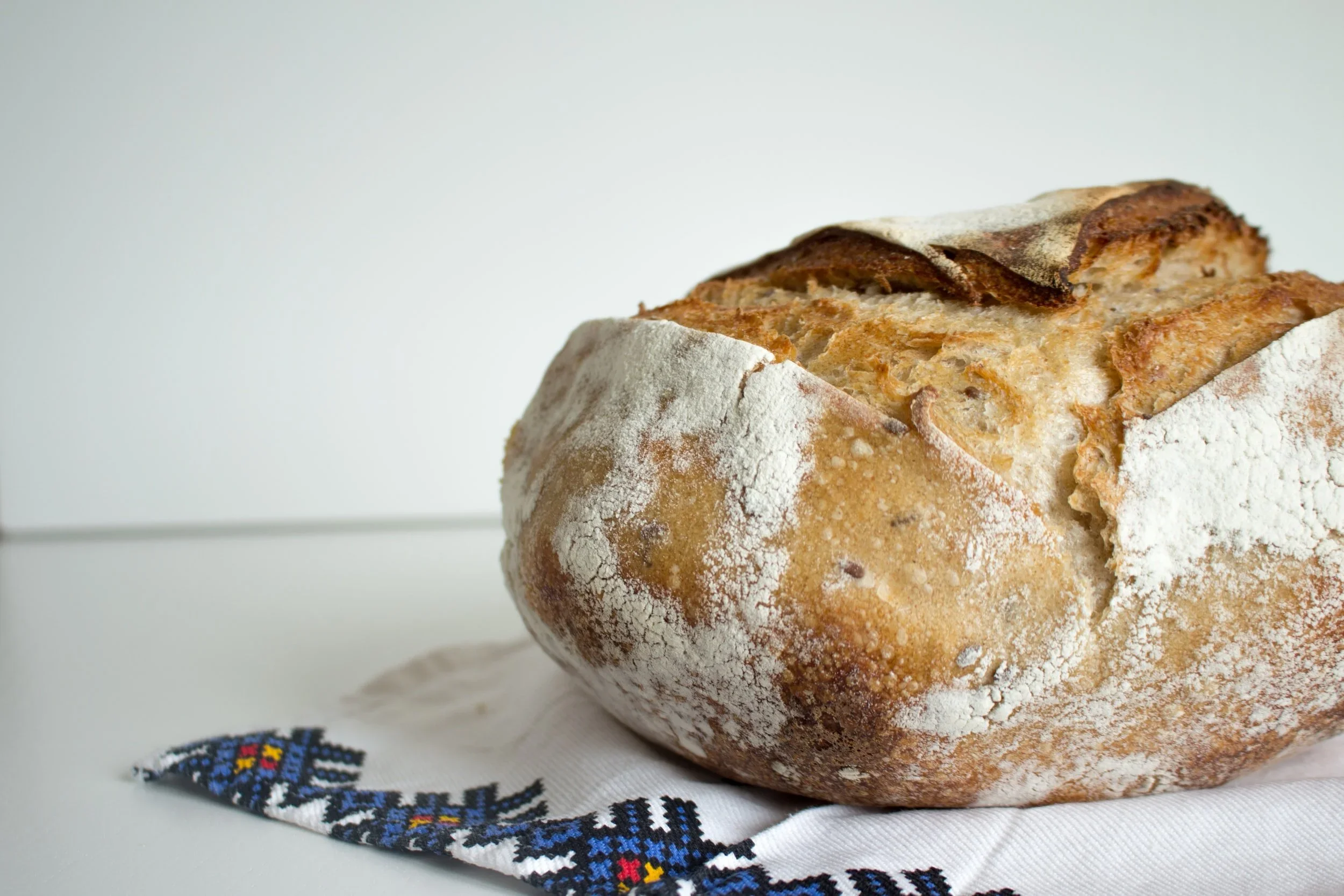
We celebrate St. Patrick’ s Day on March 17th with parades, shamrocks real or created, Irish music and foods, and “the wearing of the green.” Our celebration of this patron saint of Ireland was born to a Roman British family then captured at 16 by Irish pirates and sent to Ireland as a slave. After 6 years he escaped but later returned as a Christian missionary. Everyone knows about corned beef and cabbage on St. Patrick’s Day, but the wide variety of Irish breads is less known. Irish soda bread is likely the most familiar, but it was actually created by Native Americans, the first people known to use a natural form of soda (pearl ash). Soda Bread became Irish in the 1830s, when baking soda was first introduced. Other breads also common in Ireland are Farls, Boxty bread, Blaa buns and Vedaa bread. Several of them have recipes that substitute for all or part of the flour with potato. Given that St. Patrick’s Day comes during Lent, these basic breads would have added ingredients such as dried fruit or spices.
Traditionally, with no access to ovens, soda bread was cooked in three-legged iron pots or on griddles over open hearths, giving bread its famous hard crust, dense texture, and slightly sour tang.
Tip: Avoid US all-purpose and bread flour, they come from hard wheat. Flour in Europe comes mostly from soft winter wheat, thus flour in Europe resembles US cake flour. Since Ireland mainly grows soft wheat, the best results for Irish bread recipes use cake flour.
The recipe below is for original soda bread – no butter, sugar, eggs and fruit, that’s a muffin!
Irish Soda Bread
For a printable version of this recipe, click here.
Ingredients
15 oz./3 cups cake flour
1 1/8 teaspoons baking soda
18 oz./2 1.4 cups sour milk/buttermilk, shake well
1 ¾ teaspoons Salt
Directions
Place oven rack in the middle of the oven.
Preheat oven about ¼ hour before to 450°F.
Use a deep cast-iron frying pan with lid or equivalent lined roughly with parchment paper.
In a large bowl whisk all dry ingredients thoroughly.
Add buttermilk and mix well with a spatula, making sure there are no air bubbles. (Note: mixing just until dough combines gives a fluffier bread; mixing for about half a minute more gives a chewier bread). This is a sticky dough.
Use the spatula to put all the dough onto the parchment paper in the frying pan and smooth the dough into a rough round shape.
Using a very sharp knife, score a deep cross so the dough is almost in quarters. You may need to clean the blade between cuts.
Cover and bake about 40 to 45 minutes, until risen and golden.
Then take off the lid and continue baking for about 14 minutes, until it is a darker brown.
Remove parchment and cool inverted on a wire rack for about 30 minutes to let the bread stabilize i.e. “letting the crumb set.”
Note: For thin slices, make sure the bread is completely cooled (2-3 hours); store airtight; freshen by toasting.